Bathroom Mold Removal in Baton Rouge, LA
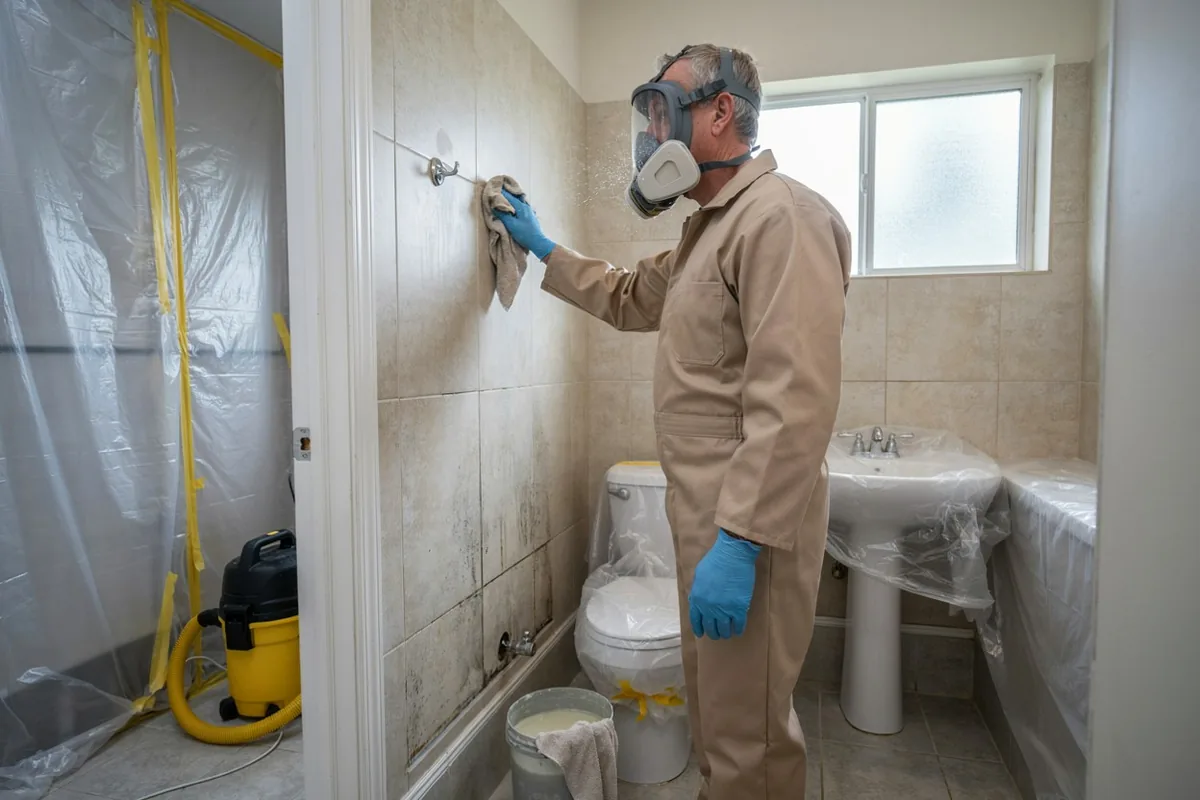
Bathrooms are the most common mold call we get in Baton Rouge, for a simple reason: they’re the room that stays wet the longest in a house that already sits in 88 percent morning humidity, and a lot of them have a fan that doesn’t vent anywhere useful. Call us and describe the spot in your bathroom where the growth shows.
The Shower Grout You Can Clean Yourself
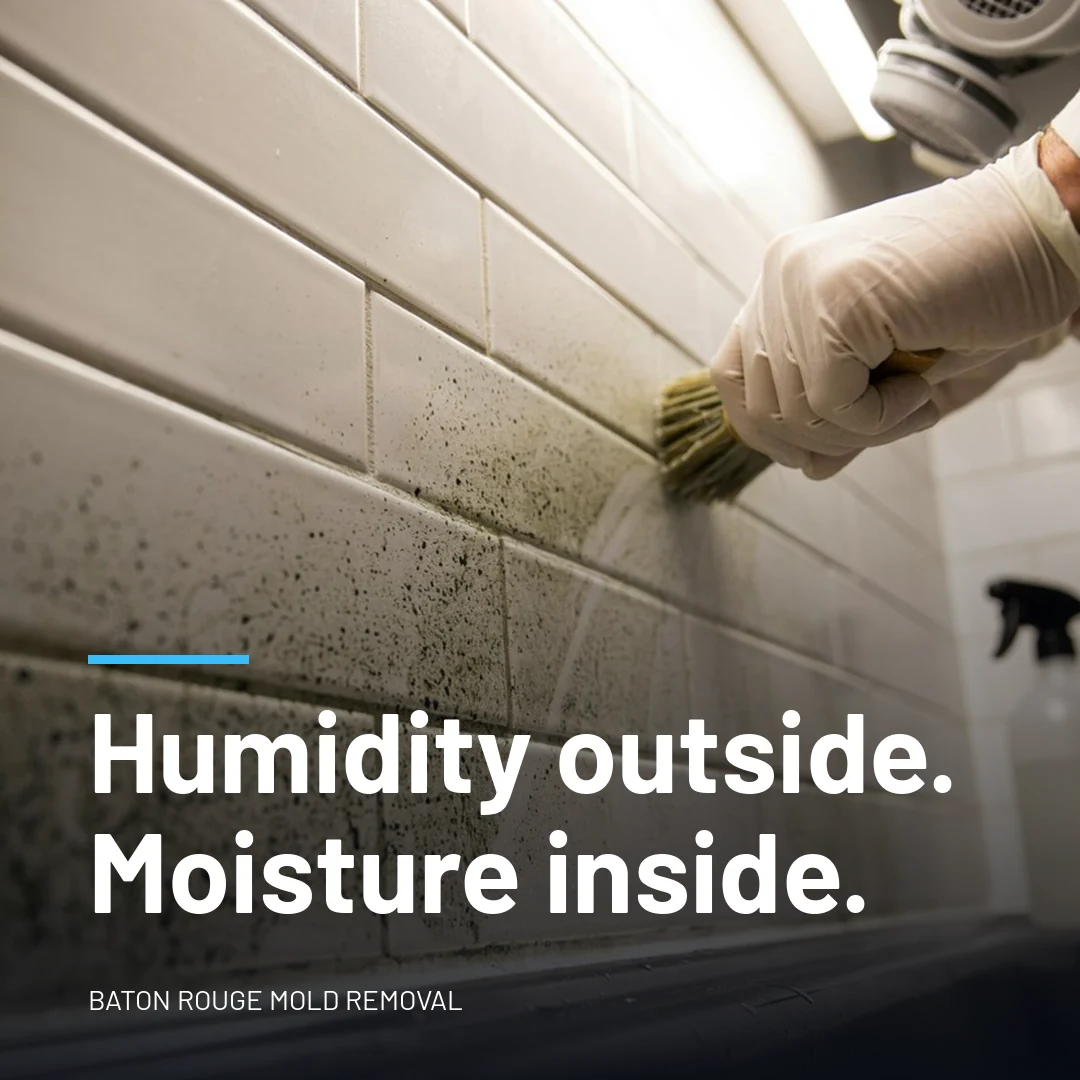
If it’s on tile, grout, caulk, or a painted hard surface and covers less than about ten square feet — a three-by-three patch — EPA says you can clean it yourself with detergent and water. Run the fan. Replace the caulk if it’s black underneath.
When it’s a job
- On the ceiling drywall, in the wall behind the toilet or tub, under the vanity, or on the subfloor around the toilet flange.
- Those are porous materials; the growth is inside them, and scrubbing the surface changes the look for a month. Bleach isn’t a remediation plan.
- The material comes out, the cavity gets cleaned and dried, and we tell you where the water is getting in — a shower pan, a wax ring, a supply line, a tub overflow — so it doesn’t come back.
Describe What You’re Seeing, Late Calls Welcome
Original Plumbing In A Broadmoor Bathroom Wall
Slab ranches from the 1960s and 70s in Broadmoor, Sherwood Forest, and Villa del Rey often carry the original bathroom plumbing, and a slow leak under the slab or inside a wall shows up as a soft baseboard long before it shows up as a puddle. Raised houses in Mid City and the Garden District leak down into the crawl space instead, and the smell comes up through the floor.